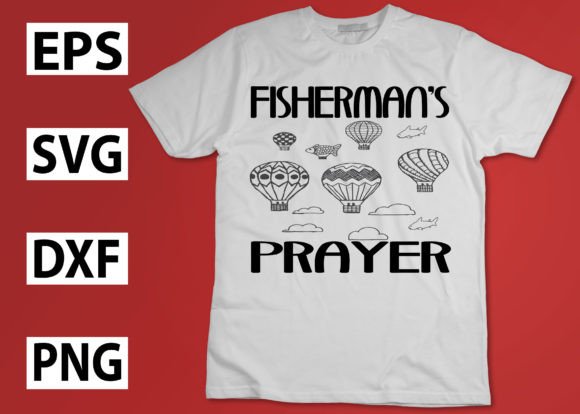
Fisherman’s Prayer
A Quiet Anchor in a Busy Design Library
When I first opened the Fisherman’s Prayer embroidery file bundle, I didn’t see just another fishing-themed quote—I saw intention. The layout breathes: gentle curves echo wave motion, the script feels handwritten but legible, and the subtle nautical motif (a small anchor tucked beneath the final “A”) doesn’t shout—it settles. This isn’t a loud, graphic-heavy design built for Instagram scrolls. It’s a thoughtful, grounded piece—ideal for handmade products where sincerity matters more than saturation.
Where It Lives Best: Real Projects, Real People
Last week, I used Fisherman’s Prayer to embroider a navy cotton tote for a local marina gift shop. The result? A quiet standout among louder, busier designs. Customers paused—not because it was flashy, but because it felt *known*. That same calm resonance works beautifully on baby onesies (paired with soft ecru thread), linen pillow covers for coastal nurseries, and unisex sweatshirts for small-town fishing clubs. As a machine embroidery design, it shines on medium-weight fabrics like canvas, twill, and midweight cotton knits—where stitch clarity holds without fighting texture.
I also tested it as an embroidered patch on a denim jacket lapel. With light stabilizer and careful hooping, the satin stitch on the lettering stayed crisp, and the anchor detail read clearly—even at 2.5” wide. That versatility makes Fisherman’s Prayer a smart pick for Etsy sellers curating meaningful, non-trend-driven collections. It’s not seasonal fluff; it’s evergreen craft business inventory.
Where to Pause—and Why
Don’t reach for Fisherman’s Prayer when stitching on ultra-thin rayon or heavily textured terry cloth. The delicate curve of the script and fine line weight demand stability. On stretchy fabric like lightweight jersey, skip direct embroidery—opt instead for a fused applique design using the included SVG or DXF files as a cut guide. And if you’re planning holiday embroidery on dark fabric, test thread contrast early: light ecru or oatmeal thread reads warmly, but stark white can flatten the mood.
Curved surfaces—like caps or curved apron pockets—require extra attention. The design’s gentle arc helps, but avoid placing it too close to seams or brims where distortion creeps in. Also, while the lettering is legible at 3”, I wouldn’t shrink it below 2” for finished products. Tiny lettering risks fill stitch crowding and lost nuance—especially in commercial embroidery where consistency across dozens of units matters.
Stitch Density & Stabilizer Strategy
The Fisherman’s Prayer embroidery file strikes a practical balance: no over-stuffed fills, no excessive underlay—just clean running stitch outlines and modest satin columns. That means less bulk on baby embroidery and better drape on custom apparel. But don’t skip stabilizer. A medium-weight tear-away works for stable cottons; switch to cut-away for knits or anything destined for frequent washing (think tea towels, kitchen aprons, or boutique blankets). Always run a test on scrap fabric first—especially if layering it over printed fabric or near seams.
What It Adds—Beyond Thread and Fabric
This isn’t just about execution—it’s about perception. When customers see Fisherman’s Prayer on a personalized gift, they register care, not convenience. That elevates perceived value. On an Etsy listing, it supports brand consistency for makers who lean into authenticity—coastal, contemplative, quietly skilled. It builds trust: no frantic clipart energy, no mismatched fonts, no visual noise. Just one cohesive, hand-selected design asset that says, “I chose this *for you*.”
For small shop owners, that translates to stronger buyer engagement. I watched three customers at a craft fair linger over a Fisherman’s Prayer-embroidered tea towel—not because it was cheapest, but because it invited conversation. One bought two: one for her husband, one framed for her own kitchen. That’s the giftability factor working.
Practical Designer Notes Before You Stitch
- Test before committing: Run a full-size stitch-out on your target fabric + stabilizer combo. Check how the anchor detail holds up and whether letter spacing stays open.
- Review thread colors thoughtfully: Avoid high-contrast combos unless intentional—e.g., charcoal thread on cream linen deepens the reflective tone; bright yellow would break it.
- Confirm hoop size compatibility: Measure the design’s widest point against your standard hoops. If it’s tight, consider repositioning or trimming excess vector space in your editing software.
- Inspect corners and terminals: Zoom in on the SVG and EPS files—look for stray nodes or overlapping paths that could cause stitch errors.
- Mock it both ways: Preview the PNG in black-and-white and grayscale to assess readability on dark and light backgrounds alike.
- Licensing check: Since this is a digital embroidery file sold as Graphics within Crafts, verify permitted use before selling finished products or bundling it into digital product previews.
Final Thought: Not Every Design Needs to Stand Out—Some Just Need to Belong
Fisherman’s Prayer doesn’t compete for attention. It earns it—slowly, steadily—by fitting *into* life rather than interrupting it. Whether stitched on a child’s first fishing vest, a retirement gift for a lifelong angler, or a boutique’s signature tote, it carries weight without heaviness. For embroidery designers, craft business owners, and Etsy sellers who build value through authenticity—not volume—it’s not just another file in the folder. It’s a quiet, confident choice. And in a crowded market of fast-made, fast-forgotten designs, that kind of intention is rare. Keep it close. Use it well.